
Begin after the check
Resolve the non-attack check first. Name the character, task, skill, cause and tone, then describe the approach and conditions.
DM and session
A sound approach.
A real resistance.
The failure stays honest.

A failed task with a useful explanation
Keep the outcome and explain what stopped it.
Resolve the non-attack check first. Name the character, task, skill, cause and tone, then describe the approach and conditions.
Show concrete resistance and observable evidence. Add a limited consequence and another legitimate approach when one fits.

The evidence behind the outcome
The illustration shows an adventurer examining damaged metal in an exposed mechanism, with tools, a diagram and an hourglass nearby.
Connect the cause to observable evidence. Keep the failed task failed.
From the attempt to the evidence
Describe what stopped a credible approach.
Name the character and the non-attack task that failed. Start from the result already decided at the table.
Describe the method, skill and tools. Show what made the attempt reasonable before identifying the resistance it met.
Choose a cause that fits the scene: construction, damage, missing information, conditions, timing, opposition, tools, complexity or conflicting cues.
Explain where the approach stopped working. Keep the unsuccessful outcome while making the cause understandable.
Show what the character did well. A failed check can reveal a difficult condition without making the attempt foolish.
Leave something the character can notice. Connect the evidence to the cause so the table has useful information to act on.
Shape an immediate consequence that matches the task and scene. Keep it distinct from an invented fumble or reversed result.
Describe another legitimate method when one fits. Offering a way forward does not complete the original objective.
Add reactions from people who saw the attempt and a detail to revisit later. Keep private continuity apart from read-aloud narration.
Edit, lock and regenerate selected beats. Revisit recent session versions, use undo and redo, and export explanations you want to keep.
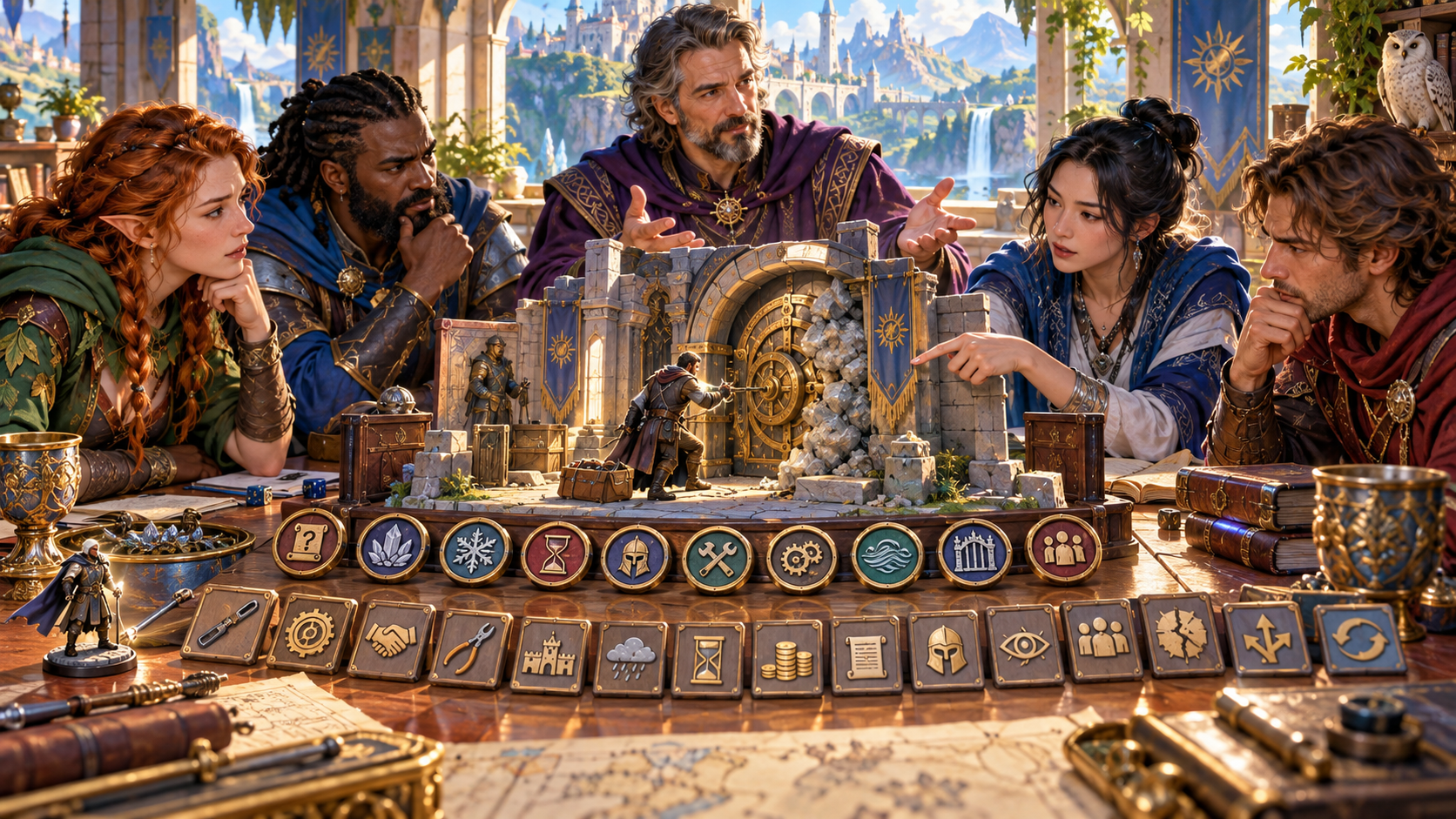
Shape the failed check
The illustration shows a Dungeon Master and players discussing a blocked door, with tabletop symbols for methods and conditions.
Choose the cause and tone. Describe the approach, conditions, consequence and possible next method.
A clear path from outcome to narration
Explain the result already decided at the table.
Name the character and attempted non-attack task. Choose the skill, reason and tone.
Add the approach, tools, setting, conditions and pressure. Record what the character knew and what opposed them.
Keep the sound approach, concrete resistance and observable evidence that match the scene. Shape a proportionate consequence.
Add witness reactions, a callback and private notes. Lock useful sections and refine the narration for its audience.

A clear explanation to use
The illustration shows an exposed lock and a row of evidence cards, with tools, a narration scroll and a private record.
Keep the approach, resistance and evidence together. Prepare a read-aloud or Dungeon Master view.
Keep narration and private continuity distinct
Save the explanation you want to keep.
Revisit versions during the current session. Use undo and redo while shaping the explanation.
Lock useful sections and regenerate individual beats. Keep the cause that best matches the existing outcome.
Copy the complete Dungeon Master version, player-facing account, read-aloud or selected sections. Keep private continuity where it belongs.
Download the explanation as JSON or copy or print the chosen version. Export the material you want to retain beyond the current session.
Your workspace and related tools
Open your tools through your VISINVOKE account.

Open the generator from the Generators collection. Get the desktop workspace through your account installer page.

Bring notes or an existing deck into an editable presentation. Refine the slides and export PowerPoint.
Product illustrations show a failed approach, physical evidence, a discussion at the table and a clear explanation with private notes.
Questions and answers
Keep adjudication at the table.
One already-decided failed non-attack skill check. It describes the approach, resistance, failure moment, observable evidence, consequence and an optional next method.
No. Resolve the check first. The generator explains its resistance while keeping the failed task failed.
Show the sound approach and what the character did well, then identify the condition or resistance that defeated that approach.
Copy the player-facing view, read-aloud or selected sections, or print the current audience-appropriate version. Keep private continuity in the Dungeon Master record.
Revisit recent versions during the current session. Export an explanation you want after closing the product, using copy, JSON download or print.
Create a VISINVOKE account or sign in. Get Desktop Control Centre through your account installer page and open the generator from the Generators collection.
Continue in VISINVOKE
Create an account or sign in. Get Desktop Control Centre through your account installer page and open the generator.
Keep the failed task and its explanation together as you edit evidence and prepare narration.